
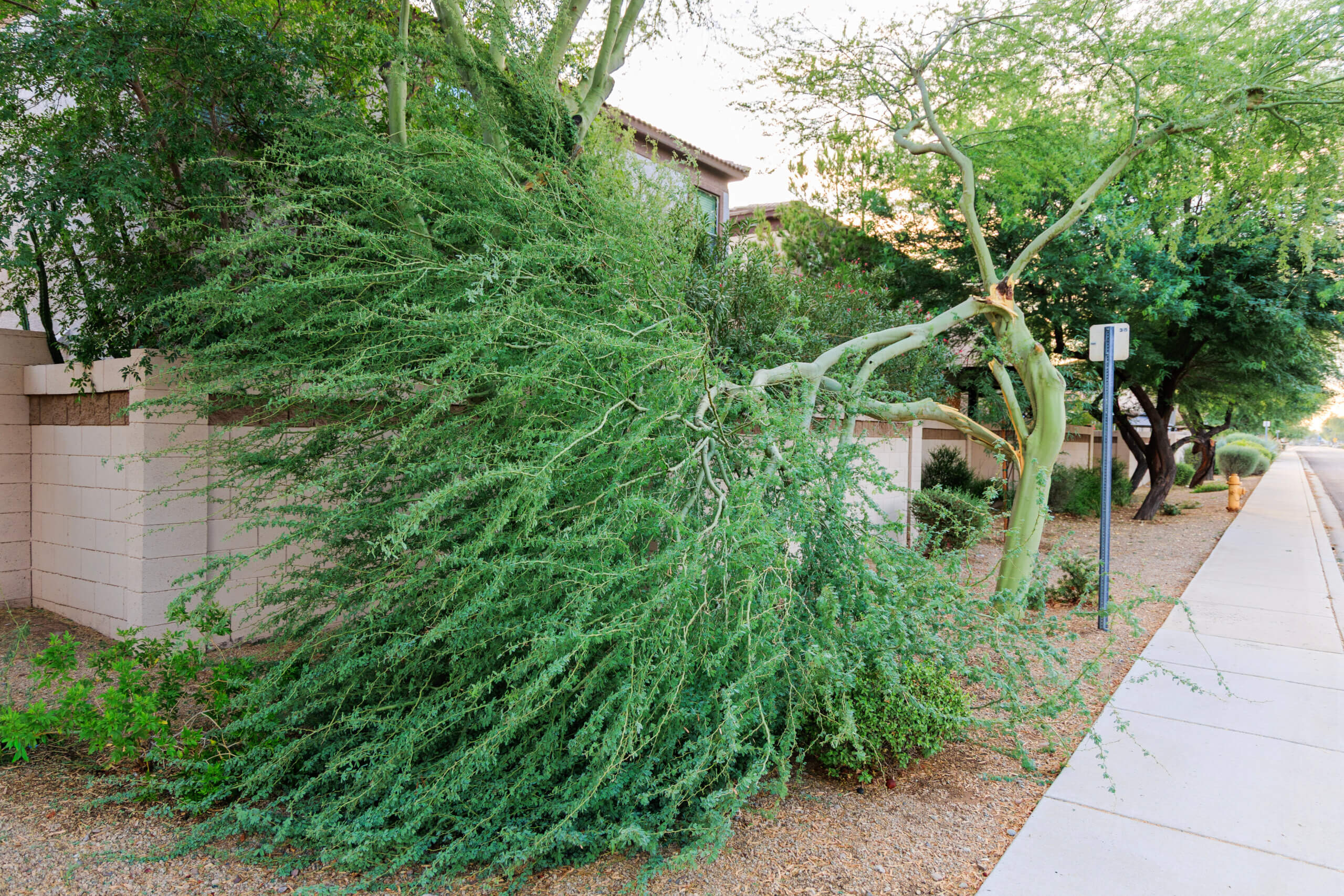
The monsoon season leaves its mark on every yard in southern Arizona, and this year was no exception. Between wind-driven debris, standing water, and soil that’s been pushed around by heavy rain, most properties need some attention before the heat lets up. If you’ve been putting off dealing with the aftermath, now is the time to assess the damage and start restoring your landscape before fall arrives. At Complete Landscaping, we know which problems need immediate attention versus which ones can wait. Here’s what we recommend tackling first.
What Storm Debris Does to Your Yard
Fallen branches, leaves, and wind-blown trash aren’t just an eyesore. Left sitting on grass or ground cover, debris blocks sunlight and traps moisture, which invites fungus and pests. Any landscape cleanup in Tucson should start here, because clearing debris gives you a clean slate to evaluate what’s underneath, including soil erosion, damaged irrigation lines, or plants that took a hit during the storms. We typically remove debris in this order:
- Large branches and downed limbs near structures or walkways first, since these pose the most immediate safety risk
- Loose organic matter like leaves and small twigs that smother turf and groundcover
- Trash and sediment washed in from runoff, which often collects near drainage points and low areas of the yard
How Monsoon Rain Damages Your Soil
Heavy, fast rainfall doesn’t soak into Arizona’s clay-heavy soil. Instead, it runs off, carrying topsoil with it and leaving behind compacted, uneven ground. Yard repair after a storm in Arizona often means regrading low spots, aerating compacted areas, and reintroducing organic matter so your soil can support plant growth. Skipping this step tends to cause the same erosion problems to repeat with every future storm.
What to Check on Your Plants and Trees
Some plants bounce back from monsoon stress on their own, but others need help. We look for split branches, leaning trees, root exposure, and leaf scorch from intense sun following heavy rain. Desert-adapted plants are generally resilient, but even cacti and native shrubs can suffer root rot if water pooled around their base for too long. Pruning damaged growth prevents disease from spreading and gives healthy branches room to recover.
Why Irrigation Systems Need a Post-Monsoon Check
Storms shift soil, which can move sprinkler heads, drip lines, and emitters out of position. An irrigation system that worked fine in June might be overwatering one area and neglecting another by August. We test water pressure, check for clogs from sediment, and recalibrate schedules, since watering needs change as temperatures start to drop.
Restore Your Yard With Landscape Cleanup in Tucson
Issues like soil compaction or a cracked irrigation line only get more expensive the longer they sit, but Complete Landscaping can get your yard back on track before planting season starts. Request a post-monsoon cleanup estimate and get started with fall landscaping in Tucson.